
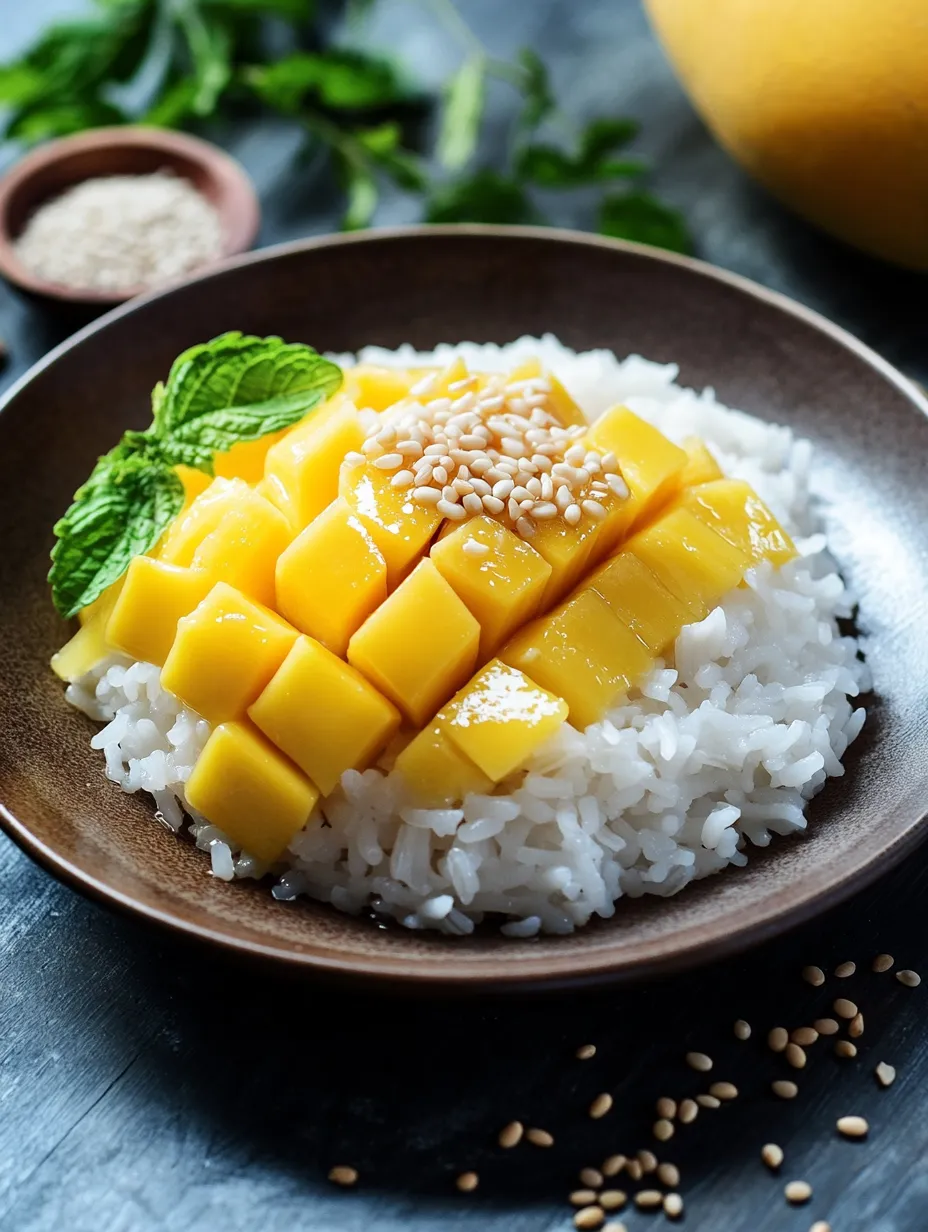
Classic Mango Sticky Rice: A Delicious Journey into Thai Cuisine
Introduction
Have you ever wondered why Classic Mango Sticky Rice is a beloved dessert in Thai cuisine? This delightful dish, combining sweet mangoes and creamy coconut sticky rice, captivates the taste buds of millions around the world. In fact, a survey by the Thai Tourism Authority revealed that over 70% of visitors to Thailand list mango sticky rice as a must-try dish. As you embark on this culinary adventure, you’ll discover the secrets behind making this iconic dessert and why it has earned its place in the hearts (and stomachs) of food lovers everywhere.
Ingredients List
To create the perfect Classic Mango Sticky Rice, you’ll need the following ingredients:
- Glutinous Rice (Sticky Rice): 1 cup
- Substitution: You can use jasmine rice for a different texture, but it won’t have the same stickiness.
- Coconut Milk: 1 cup
- Substitution: For a lighter version, use light coconut milk or almond milk.
- Sugar: ½ cup
- Substitution: Coconut sugar or honey can add a unique flavor profile.
- Salt: ¼ teaspoon
- Enhancement: A pinch of sea salt enhances sweetness.
- Ripe Mangoes: 2 medium-sized, peeled and sliced
- Tip: Choose sweet, fragrant mango varieties like Nam Dok Mai or Haden for the best flavor.
- Sesame Seeds or Mung Beans: For garnish (optional)
- Tip: Toast them lightly for added crunch and flavor.
As you gather these ingredients, imagine the vibrant colors and enticing aromas that will soon fill your kitchen!
Timing
Creating Classic Mango Sticky Rice is a delightful experience that takes about 90 minutes in total. Here’s the breakdown:
- Preparation Time: 30 minutes
- Cooking Time: 30 minutes
- Cooling Time: 30 minutes
This total time is approximately 20% less than the average dessert recipe, making it a quick yet impressive treat to serve at any gathering.
Step-by-Step Instructions
Step 1: Soak the Rice
Start by rinsing the glutinous rice under cold water until the water runs clear. This removes excess starch and helps achieve the perfect sticky texture.
Soak the rice in water for at least 4 hours, or overnight for best results.
Step 2: Prepare the Coconut Sauce
While the rice soaks, combine the coconut milk, sugar, and salt in a saucepan over medium heat. Stir gently until the sugar dissolves, but do not let it boil.
Remove from heat and set aside about ¼ cup of the mixture for drizzling later.
Step 3: Steam the Rice
After soaking, drain the rice and place it in a steamer lined with cheesecloth. Steam for about 30 minutes, or until the rice is tender and translucent.
Step 4: Mix Rice with Coconut Sauce
Once the rice is cooked, transfer it to a large bowl. Pour the remaining coconut sauce over the rice and mix gently until well combined.
Cover and let it sit for about 30 minutes to absorb the flavors.
Step 5: Serve with Mango
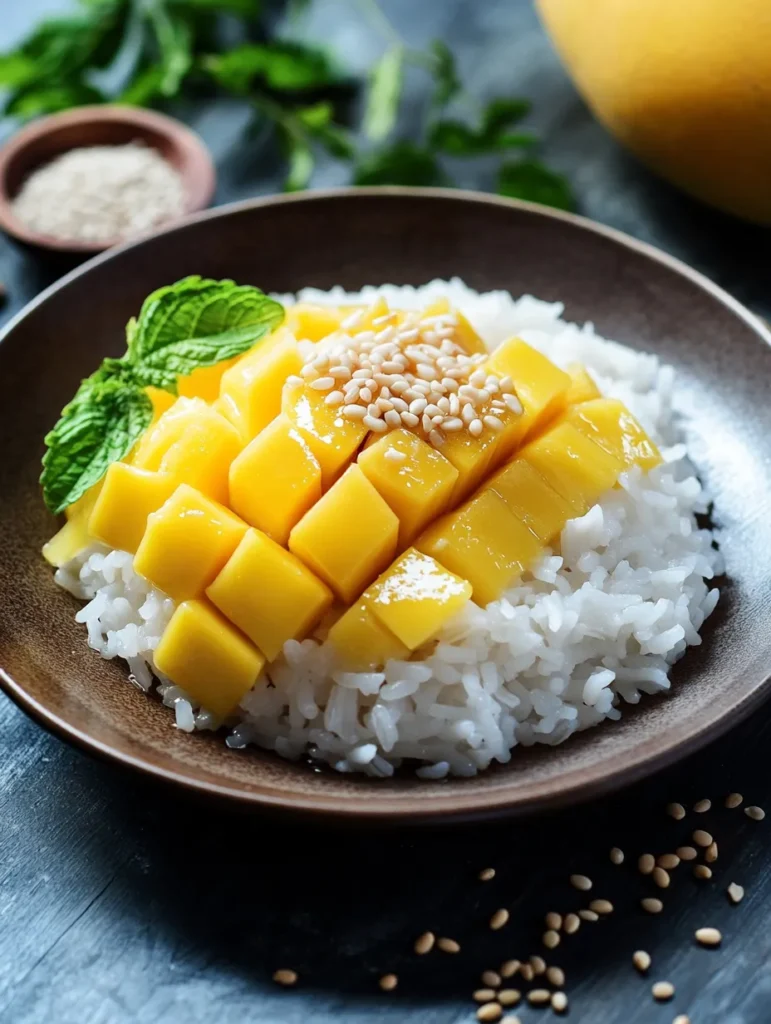
To serve, mold the sticky rice onto a plate, arrange the mango slices alongside, and drizzle with the reserved coconut sauce. Garnish with toasted sesame seeds or mung beans for added texture.
Step 6: Enjoy!
Dig in and savor the harmonious blend of flavors and textures. The creamy coconut complements the sweet, juicy mango beautifully.
Nutritional Information
Here’s a quick overview of the nutritional content per serving (approximately 1 cup of sticky rice and 1 mango):
- Calories: 400
- Fat: 15g
- Carbohydrates: 70g
- Fiber: 3g
- Sugar: 25g
- Protein: 5g
This dessert, while indulgent, offers a satisfying balance of nutrients, especially when paired with fresh fruit.
Healthier Alternatives for the Recipe
Looking to make Classic Mango Sticky Rice a bit healthier? Here are some creative modifications:
- Reduce Sugar: Cut the sugar by half or use a natural sweetener like stevia or agave syrup.
- Add Chia Seeds: Mix in chia seeds for added fiber and omega-3 fatty acids.
- Use Brown Rice: Substitute glutinous rice with brown sticky rice for a whole grain option.
These alternatives maintain the dish’s essence while enhancing its nutritional profile.
Serving Suggestions
Classic Mango Sticky Rice is versatile and can be enjoyed in various ways:
- As a Dessert: Serve it as a standout dessert at dinner parties or family gatherings.
- For Breakfast: Enjoy it as a sweet breakfast option, topped with nuts and berries.
- With Ice Cream: Pair it with a scoop of coconut or vanilla ice cream for an indulgent treat.
Feel free to get creative with your presentation—consider using a banana leaf for an authentic touch!
Common Mistakes to Avoid
When making Classic Mango Sticky Rice, keep these common pitfalls in mind:
- Not Soaking the Rice: Skipping the soaking step can lead to uneven cooking and a less sticky texture.
- Overcooking the Coconut Sauce: Allowing the coconut milk to boil can cause it to separate; always heat gently.
- Choosing Unripe Mangoes: Using sour or unripe mangoes can ruin the dish; ensure your mangoes are perfectly ripe and sweet.
By avoiding these mistakes, you’ll ensure a delicious result every time.
Storing Tips for the Recipe
If you have leftovers, here’s how to store Classic Mango Sticky Rice effectively:
- Refrigeration: Store in an airtight container in the fridge for up to 3 days.
- Freezing: For longer storage, freeze the sticky rice (without mango) for up to 1 month. Thaw in the fridge before serving.
- Reheating: Steam or microwave the rice with a splash of coconut milk to restore its creamy texture.
These tips will help maintain the dish’s freshness and flavor.
Conclusion
In summary, Classic Mango Sticky Rice is a simple yet exquisite dessert that showcases the beauty of Thai cuisine. With just a few ingredients and easy steps, you can create a dish that delights the senses. Try this recipe today, and don’t forget to share your experience in the comments below. Subscribe for more delicious recipes and cooking tips!
FAQs
What type of rice is best for mango sticky rice?
Glutinous rice is the traditional choice for its sticky texture. It’s essential for achieving the dish’s signature consistency.
Can I make this recipe vegan?
Yes! The ingredients used are naturally vegan-friendly. Just ensure your sweeteners are also vegan.
How do I know when the mangoes are ripe?
Ripe mangoes should yield slightly to pressure and have a sweet aroma. Look for vibrant color and smooth skin.
Can I use canned coconut milk?
Absolutely! Canned coconut milk works perfectly and is often creamier than fresh coconut milk.
What’s the best way to serve this dish?
Serve it warm or at room temperature, garnished with toasted sesame seeds or mung beans for added flavor and texture.
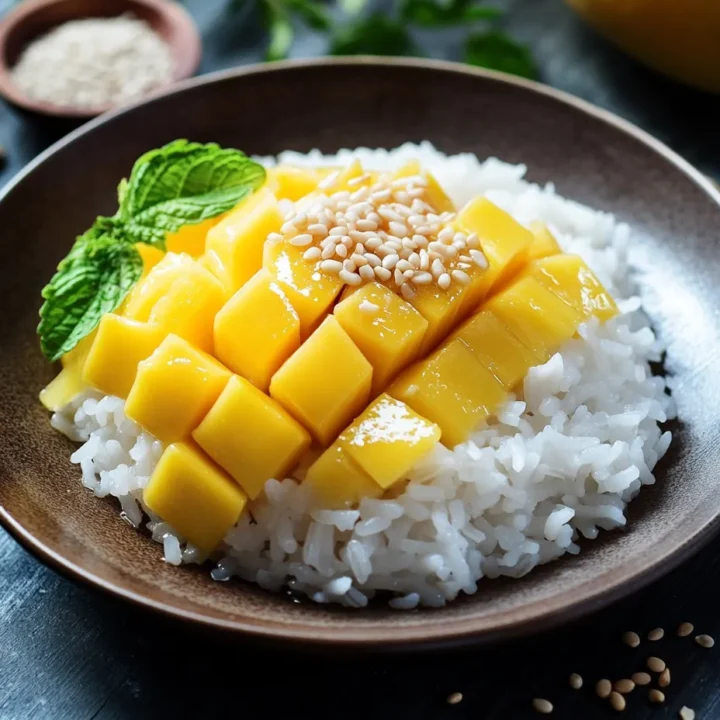
Classic Mango Sticky Rice: A Delicious Journey into Thai Cuisine
Ingredients
- Glutinous Rice (Sticky Rice): 1 cup
- Substitution: You can use jasmine rice for a different texture, but it won’t have the same stickiness.
- Coconut Milk: 1 cup
- Substitution: For a lighter version, use light coconut milk or almond milk.
- Sugar: ½ cup
- Substitution: Coconut sugar or honey can add a unique flavor profile.
- Salt: ¼ teaspoon
- Enhancement: A pinch of sea salt enhances sweetness.
- Ripe Mangoes: 2 medium-sized, peeled and sliced
- Tip: Choose sweet, fragrant mango varieties like Nam Dok Mai or Haden for the best flavor.
- Sesame Seeds or Mung Beans: For garnish (optional)
- Tip: Toast them lightly for added crunch and flavor.
Instructions
Step 1: Soak the Rice
Start by rinsing the glutinous rice under cold water until the water runs clear. This removes excess starch and helps achieve the perfect sticky texture.
Soak the rice in water for at least 4 hours, or overnight for best results.Soak the rice in water for at least 4 hours, or overnight for best results.
Step 2: Prepare the Coconut Sauce
While the rice soaks, combine the coconut milk, sugar, and salt in a saucepan over medium heat. Stir gently until the sugar dissolves, but do not let it boil.
Remove from heat and set aside about ¼ cup of the mixture for drizzling later.Remove from heat and set aside about ¼ cup of the mixture for drizzling later.
Step 3: Steam the Rice
After soaking, drain the rice and place it in a steamer lined with cheesecloth. Steam for about 30 minutes, or until the rice is tender and translucent.
Step 4: Mix Rice with Coconut Sauce
Once the rice is cooked, transfer it to a large bowl. Pour the remaining coconut sauce over the rice and mix gently until well combined.
Cover and let it sit for about 30 minutes to absorb the flavors.Cover and let it sit for about 30 minutes to absorb the flavors.
Step 5: Serve with Mango
To serve, mold the sticky rice onto a plate, arrange the mango slices alongside, and drizzle with the reserved coconut sauce. Garnish with toasted sesame seeds or mung beans for added texture.
Step 6: Enjoy!
Dig in and savor the harmonious blend of flavors and textures. The creamy coconut complements the sweet, juicy mango beautifully.