
Korean Beef Spicy Bowl: A Flavorful Journey to Your Table
Introduction
Have you ever wondered how a single bowl of food can transport you to the bustling streets of Seoul? The Korean Beef Spicy Bowl does just that, combining bold flavors and vibrant ingredients to create a dish that tantalizes the taste buds. With the right recipe, you can whip up this delicious meal in no time, challenging the notion that authentic Korean cuisine is complicated. In this blog post, we’ll explore the intricacies of this dish, from its ingredients to its preparation, ensuring you can recreate this culinary delight at home.
Ingredients List
To prepare a mouthwatering Korean Beef Spicy Bowl, gather the following ingredients:
- Beef: 1 pound of flank steak or sirloin, thinly sliced against the grain.
- Marinade:
- 3 tablespoons soy sauce (low sodium recommended)
- 2 tablespoons gochujang (Korean chili paste)
- 1 tablespoon sesame oil
- 2 tablespoons brown sugar
- 4 cloves garlic, minced
- 1 teaspoon ginger, grated
- Vegetables:
- 1 cup bell peppers, sliced (red and yellow for color)
- 1 cup carrots, julienned
- 1 cup broccoli florets
- Garnishes:
- Green onions, chopped
- Sesame seeds
- Kimchi (optional)
- Rice: 2 cups cooked jasmine or brown rice (or cauliflower rice for a low-carb option)
Substitution Suggestions
- Meat Alternatives: Use chicken or tofu for a vegetarian option.
- Gochujang: If unavailable, sriracha can be a substitute, though it will alter the flavor profile slightly.
- Vegetables: Feel free to add or substitute any seasonal vegetables you prefer, such as zucchini or snap peas.
Timing
Preparing the Korean Beef Spicy Bowl is efficient, taking approximately 30 minutes from start to finish. This is about 20% less time than many traditional Korean recipes, making it a perfect option for a weeknight dinner. Here’s the breakdown:
- Preparation Time: 10 minutes
- Cooking Time: 20 minutes
- Total Time: 30 minutes
Step-by-Step Instructions
Step 1: Marinate the Beef
In a mixing bowl, combine soy sauce, gochujang, sesame oil, brown sugar, minced garlic, and grated ginger. Add the thinly sliced beef, ensuring each piece is well-coated. Let it marinate for at least 15 minutes to absorb the flavors.
Step 2: Prepare the Vegetables
While the beef marinates, wash and chop your vegetables. Slice the bell peppers and julienne the carrots. Break the broccoli into bite-sized florets. This not only enhances the dish’s texture but also adds vibrant colors.
Step 3: Cook the Beef
Heat a large skillet or wok over medium-high heat. Once hot, add the marinated beef in a single layer. Cook for about 3-4 minutes without stirring to allow a nice sear. Then, stir-fry for an additional 2-3 minutes until the beef is cooked through.
Step 4: Add the Vegetables
Add the sliced bell peppers, carrots, and broccoli to the skillet. Stir-fry for another 5 minutes until the vegetables are tender yet crisp. This step ensures that the veggies retain their nutrients and vibrant colors.
Step 5: Serve the Dish
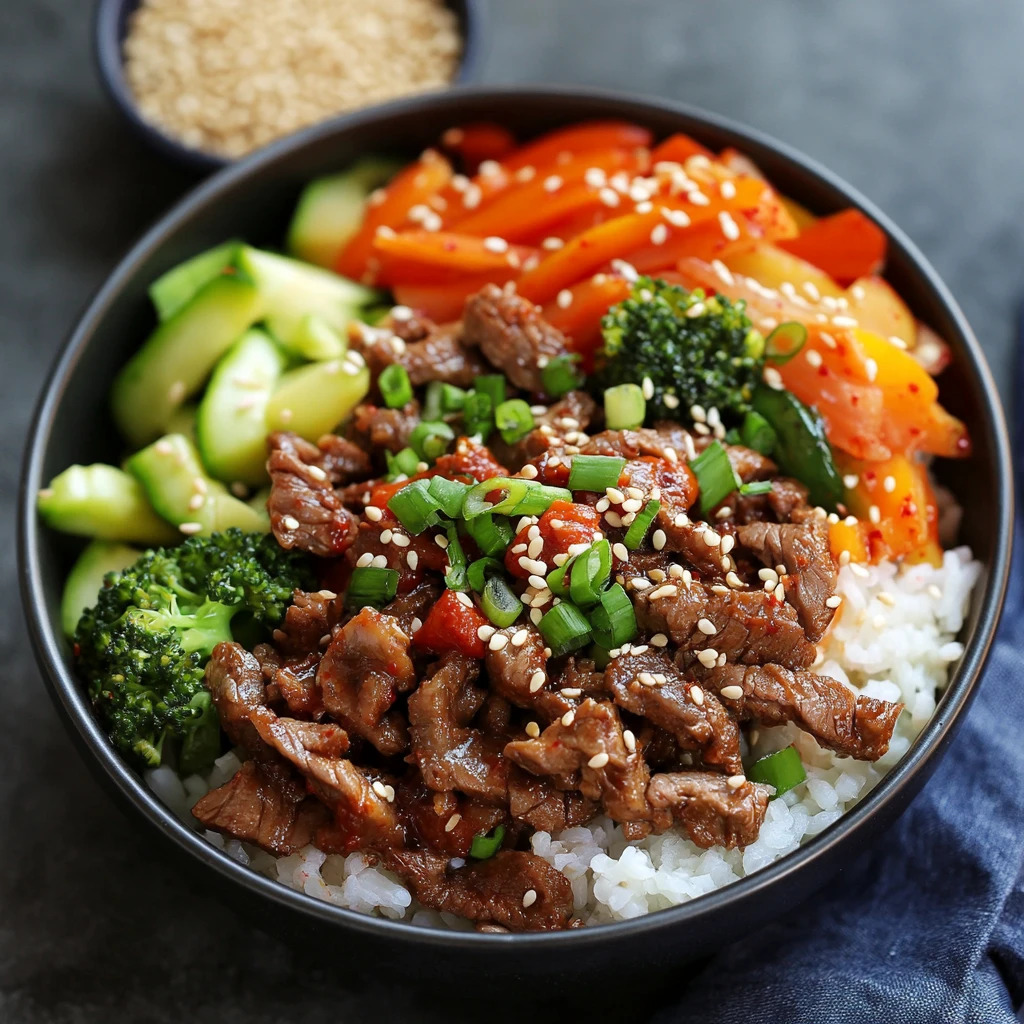
Spoon the cooked rice into bowls, then top with the beef and vegetable mixture. Garnish with chopped green onions and sesame seeds. For an extra kick, add a side of kimchi.
Nutritional Information
Understanding the nutritional value of your meal is essential. Here’s a breakdown of the Korean Beef Spicy Bowl per serving:
- Calories: 450
- Protein: 30g
- Carbohydrates: 50g
- Dietary Fiber: 4g
- Fat: 15g
- Sodium: 700mg
Nutritional Insights
This dish is rich in protein from the beef, essential vitamins from the vegetables, and healthy fats from sesame oil. It’s a balanced meal that provides energy and satisfaction.
Healthier Alternatives for the Recipe
If you’re looking to make the Korean Beef Spicy Bowl even healthier, consider these modifications:
- Lean Cuts of Meat: Opt for lean cuts like tenderloin to reduce fat content.
- Whole Grain Rice: Substitute white rice with brown rice or quinoa for added fiber.
- Increase Vegetables: Add more vegetables like spinach or kale to boost nutrient density without significantly increasing calories.
- Low-Sodium Options: Use low-sodium soy sauce and gochujang to reduce sodium intake.
Serving Suggestions
To elevate your Korean Beef Spicy Bowl experience, consider these serving ideas:
- Bowl Variations: Create a build-your-own bowl station with various toppings like avocado, pickled radishes, or a fried egg.
- Pairing: Serve with a side of miso soup or a simple cucumber salad to complement the flavors.
- Presentation: Use colorful bowls to enhance visual appeal, making the dish more inviting.
Common Mistakes to Avoid
When preparing your Korean Beef Spicy Bowl, here are some common pitfalls to avoid:
- Overcooking the Beef: Thinly sliced beef cooks quickly. Avoid overcooking, as it can become tough and chewy.
- Skipping the Marinade: Don’t rush the marinating process; it’s crucial for flavor. Aim for at least 15 minutes, or longer if possible.
- Crowding the Pan: Cook the beef in batches if necessary. Crowding the pan can lead to steaming rather than searing, affecting texture.
Storing Tips for the Recipe
To maintain freshness and flavor, follow these storage tips:
- Refrigeration: Store leftovers in an airtight container in the refrigerator for up to 3 days.
- Freezing: For longer storage, freeze the beef and vegetable mixture in a freezer-safe container for up to 3 months. Cooked rice can also be frozen separately.
- Reheating: When ready to enjoy leftovers, reheat in a skillet over medium heat until warmed through, adding a splash of water or broth to prevent drying out.
Conclusion
The Korean Beef Spicy Bowl is a delightful dish that combines rich flavors and vibrant ingredients, making it a perfect meal for any occasion. With simple steps and accessible ingredients, you can create this culinary masterpiece right in your kitchen. We invite you to try this recipe, share your feedback in the comments, and subscribe for more delicious updates!
FAQs
What can I serve with the Korean Beef Spicy Bowl?
You can serve it with miso soup, a side salad, or steamed dumplings for a complete meal.
Can I make this dish vegetarian?
Yes! Substitute the beef with tofu or tempeh and adjust the marinade accordingly for a delicious vegetarian version.
How spicy is the Korean Beef Spicy Bowl?
The spice level can be adjusted based on your preference. Use less gochujang for a milder flavor or add more for extra heat.
Can I prepare this dish ahead of time?
Yes, you can marinate the beef and chop the vegetables a day in advance. Just store them separately in the refrigerator until you’re ready to cook.
What if I can’t find gochujang?
If gochujang is unavailable, you can use sriracha or a mix of chili powder and soy sauce, though the flavor will differ slightly.
Korean Beef Spicy Bowl: A Flavorful Journey to Your Table
Ingredients
- Beef: 1 pound of flank steak or sirloin, thinly sliced against the grain.
- Marinade:
- 3 tablespoons soy sauce (low sodium recommended)
- 2 tablespoons gochujang (Korean chili paste)
- 1 tablespoon sesame oil
- 2 tablespoons brown sugar
- 4 cloves garlic, minced
- 1 teaspoon ginger, grated
- Vegetables:
- 1 cup bell peppers, sliced (red and yellow for color)
- 1 cup carrots, julienned
- 1 cup broccoli florets
- Garnishes:
- Green onions, chopped
- Sesame seeds
- Kimchi (optional)
- Rice: 2 cups cooked jasmine or brown rice (or cauliflower rice for a low-carb option)
Instructions
Step 1: Marinate the Beef
In a mixing bowl, combine soy sauce, gochujang, sesame oil, brown sugar, minced garlic, and grated ginger. Add the thinly sliced beef, ensuring each piece is well-coated. Let it marinate for at least 15 minutes to absorb the flavors.
Step 2: Prepare the Vegetables
While the beef marinates, wash and chop your vegetables. Slice the bell peppers and julienne the carrots. Break the broccoli into bite-sized florets. This not only enhances the dish's texture but also adds vibrant colors.
Step 3: Cook the Beef
Heat a large skillet or wok over medium-high heat. Once hot, add the marinated beef in a single layer. Cook for about 3-4 minutes without stirring to allow a nice sear. Then, stir-fry for an additional 2-3 minutes until the beef is cooked through.
Step 4: Add the Vegetables
Add the sliced bell peppers, carrots, and broccoli to the skillet. Stir-fry for another 5 minutes until the vegetables are tender yet crisp. This step ensures that the veggies retain their nutrients and vibrant colors.
Step 5: Serve the Dish
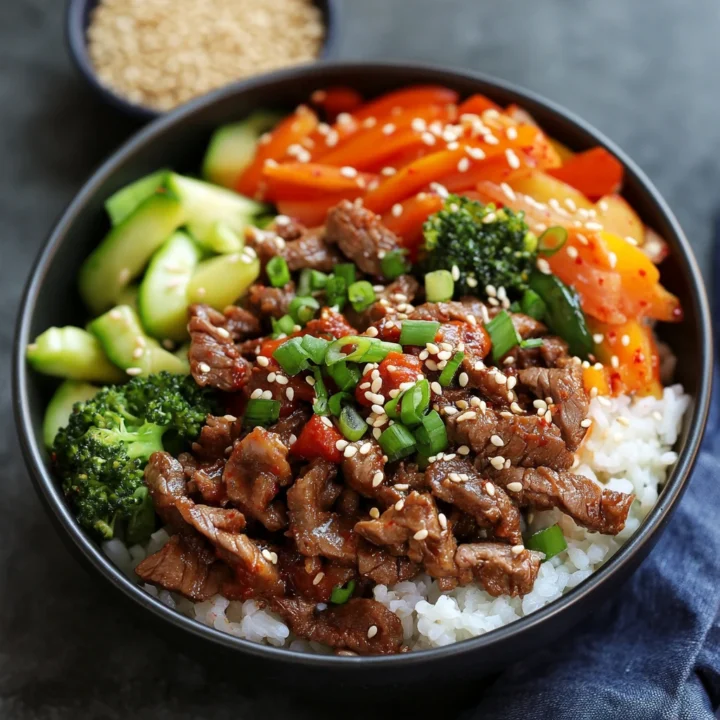
Spoon the cooked rice into bowls, then top with the beef and vegetable mixture. Garnish with chopped green onions and sesame seeds. For an extra kick, add a side of kimchi.