
Mango Sticky Rice Dessert Bliss
Introduction
Have you ever wondered why mango sticky rice has become a beloved dessert across the globe? This delightful Thai treat not only tantalizes your taste buds but also offers a perfect balance of flavors and textures. With its creamy coconut milk, sweet ripe mango, and chewy sticky rice, it’s no surprise that this dessert has gained such popularity. In this blog post, we will explore how to create your own Mango Sticky Rice Dessert Bliss at home, ensuring you impress your friends and family with this exotic dish. Let’s dive into the luscious world of mango sticky rice!
Ingredients List
To create the perfect Mango Sticky Rice, you will need the following ingredients:
- Glutinous Rice (1 cup): This special sticky rice is essential for achieving the right texture. If unavailable, you can use regular short-grain rice, but the texture will differ.
- Coconut Milk (1 cup): Use full-fat coconut milk for a rich, creamy flavor. Light coconut milk can be substituted for a lower-calorie option.
- Sugar (1/4 cup): Granulated sugar works best, but you can use coconut sugar for a more natural sweetness.
- Salt (1/4 teaspoon): A pinch of salt enhances the overall flavor.
- Ripe Mangoes (2 large): Choose sweet, ripe mangoes for the best flavor. Varieties like Ataulfo or Haden are excellent choices.
- Sesame Seeds or Mung Beans (for garnish): Optional, but they add a nice crunch and visual appeal.
Sensory Descriptions
Imagine the soft, chewy texture of the sticky rice paired with the smooth, creamy coconut milk and the bright, juicy sweetness of the mango. This combination creates a symphony of flavors that dances on your palate.
Timing
Preparing Mango Sticky Rice takes about 90 minutes, which is 20% less time than many other dessert recipes requiring extensive baking or chilling. Here’s the breakdown:
- Preparation Time: 30 minutes (includes soaking the rice and cutting the mango)
- Cooking Time: 30 minutes (steaming the rice and making the coconut sauce)
- Cooling Time: 30 minutes (to allow the flavors to meld)
Step-by-Step Instructions
Step 1: Soak the Rice
Begin by rinsing the glutinous rice under cold water until the water runs clear. This removes excess starch. Then, soak the rice in water for at least 4 hours or overnight for best results.
Step 2: Steam the Rice
After soaking, drain the rice and place it in a steamer lined with cheesecloth. Steam over simmering water for about 30 minutes or until the rice is tender and sticky. This method ensures even cooking and retains moisture.
Step 3: Prepare the Coconut Sauce
While the rice is steaming, combine the coconut milk, sugar, and salt in a saucepan over medium heat. Stir until the sugar dissolves, but do not let it boil. Reserve about 1/4 cup of the sauce for drizzling later.
Step 4: Mix the Rice with Coconut Sauce
Once the rice is cooked, transfer it to a mixing bowl. Pour the warm coconut sauce over the rice and gently fold it in. Allow the rice to sit for about 20 minutes to absorb the flavors.
Step 5: Slice the Mango
While the rice absorbs the coconut milk, peel and slice the mangoes. Aim for thin, elegant slices to make your presentation appealing.
Step 6: Serve
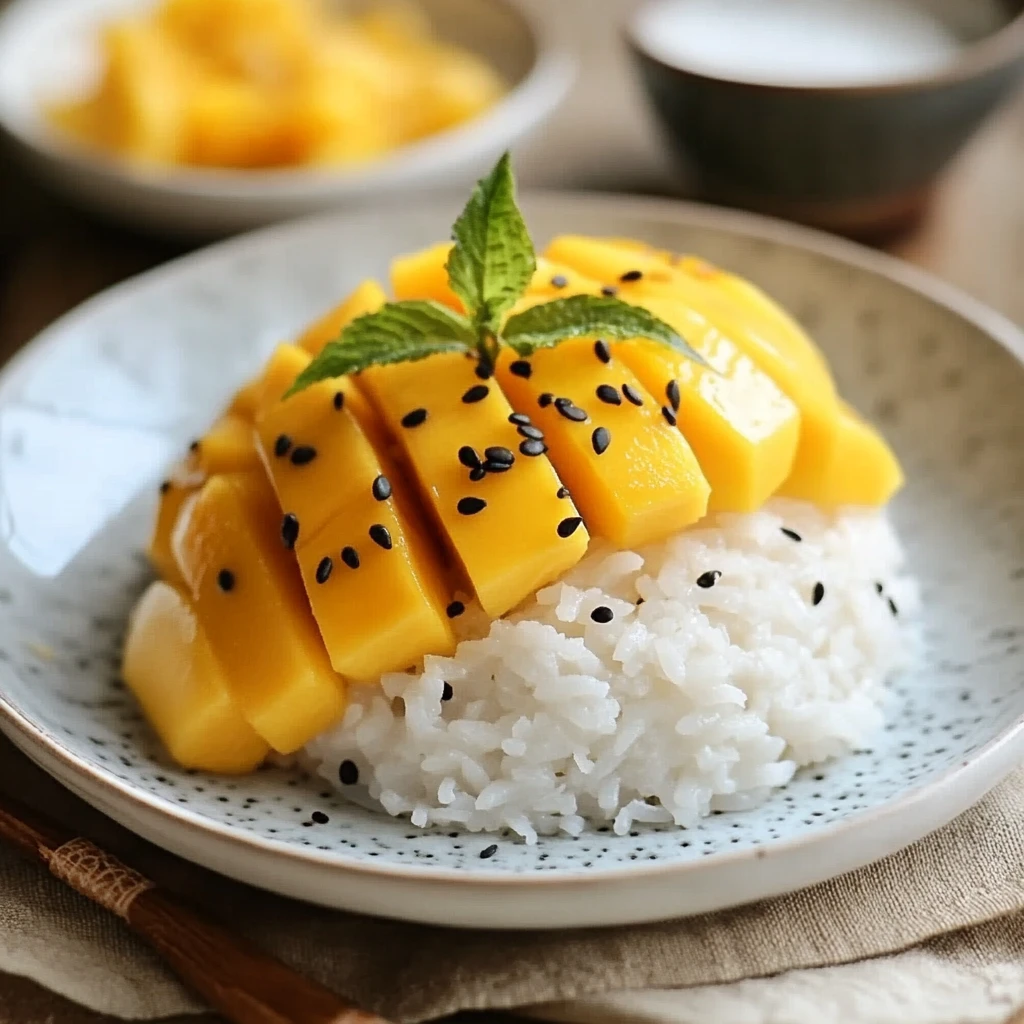
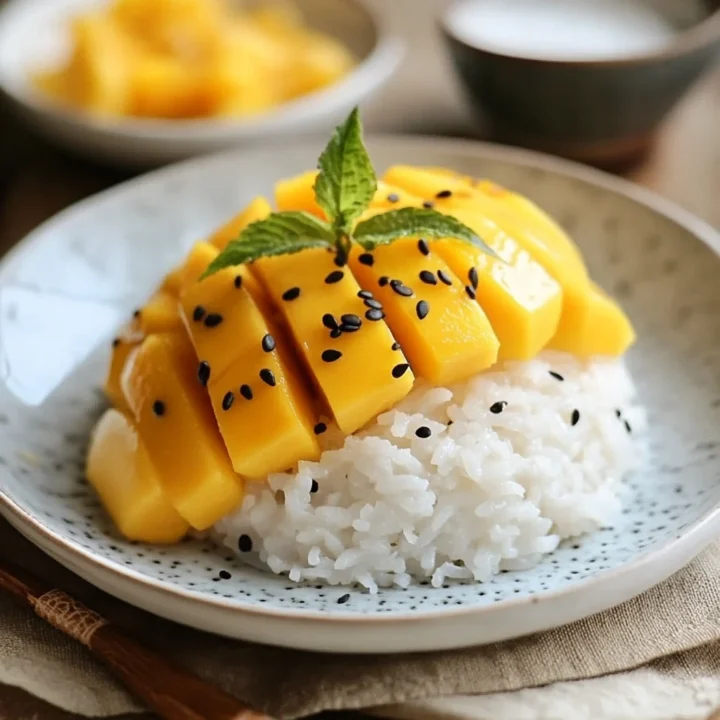
To serve, mold a portion of the sticky rice onto a plate, place the mango slices beside it, and drizzle with the reserved coconut sauce. Garnish with sesame seeds or mung beans for added texture.
Nutritional Information
Here’s a breakdown of the nutritional content per serving (approximately):
- Calories: 320
- Total Fat: 12g
- Saturated Fat: 10g
- Cholesterol: 0mg
- Sodium: 150mg
- Total Carbohydrates: 50g
- Dietary Fiber: 2g
- Sugars: 20g
- Protein: 4g
Nutritional Insights
Mango Sticky Rice is a treat that, while indulgent, offers some health benefits. Mangoes are rich in vitamins A and C, while coconut milk provides healthy fats that can be beneficial in moderation.
Healthier Alternatives for the Recipe
If you’re looking to make this dessert a bit healthier, consider the following modifications:
- Use Brown Rice: Swap glutinous rice for brown rice for added fiber and nutrients. Cooking times may vary, so adjust accordingly.
- Reduce Sugar: Cut down on the sugar or use a natural sweetener like honey or agave nectar.
- Coconut Milk Alternatives: Use light coconut milk or a plant-based alternative like almond or oat milk for a lower-calorie option.
- Add Fruits: Incorporate additional fruits like berries or bananas to enhance the nutritional profile and flavor.
Serving Suggestions
Mango Sticky Rice is versatile and can be served in various ways:
- Chilled Dessert: Allow the dish to cool completely and serve it as a refreshing treat on hot days.
- Breakfast Option: Serve it warm as a breakfast option, topped with fresh fruit and nuts.
- Pair with Ice Cream: For an indulgent twist, serve alongside a scoop of coconut or vanilla ice cream.
- Plating Ideas: Use a ring mold for a more elegant presentation, layering mango slices artfully around the sticky rice.
Common Mistakes to Avoid
Here are some common pitfalls to watch out for when making Mango Sticky Rice:
- Not Soaking the Rice: Skipping the soaking step can result in unevenly cooked rice that lacks the desired stickiness.
- Overcooking the Rice: Keep an eye on the steaming process; overcooked rice can become mushy.
- Using Unripe Mangoes: Ensure your mangoes are ripe for the best flavor. Unripe mangoes can be too tart and ruin the balance of sweetness.
- Neglecting the Coconut Sauce: Allow the coconut sauce to cool slightly before mixing it with the rice to avoid making the rice too soggy.
Storing Tips for the Recipe
If you have leftovers or want to prepare in advance, here are some storage tips:
- Refrigeration: Store the sticky rice and coconut sauce separately in airtight containers in the refrigerator for up to 3 days.
- Freezing: While not ideal, you can freeze the sticky rice for up to 1 month. Thaw in the refrigerator before reheating.
- Reheating: Reheat sticky rice by steaming or microwaving with a splash of water to restore moisture.
Conclusion
Mango Sticky Rice is a delightful dessert that combines sweet mangoes with creamy coconut rice, creating a blissful treat. With easy-to-follow steps and room for personalization, this recipe is perfect for any occasion. Try it out, and don’t forget to share your experience in the comments below! Subscribe for more delicious recipes and updates!
FAQs
Q1: Can I use regular rice instead of glutinous rice?
A1: While glutinous rice is preferred for its texture, you can use short-grain rice as a substitute. The texture will differ, but it can still be delicious!
Q2: How can I tell if my mangoes are ripe?
A2: Ripe mangoes should feel slightly soft when gently squeezed and have a sweet aroma near the stem. The skin may also show some wrinkles.
Q3: Is it possible to make this dish vegan?
A3: Yes! This recipe is naturally vegan if you use plant-based alternatives for sugar and coconut milk.
Q4: Can I prepare this dessert ahead of time?
A4: Absolutely! You can prepare the sticky rice and coconut sauce ahead of time. Just store them separately and assemble before serving.
Q5: What other fruits can I use in this recipe?
A5: Besides mangoes, you can experiment with fruits like bananas, strawberries, or even tropical fruits like passion fruit for a unique twist.
Mango Sticky Rice Dessert Bliss
Ingredients
- Glutinous Rice (1 cup): This special sticky rice is essential for achieving the right texture. If unavailable, you can use regular short-grain rice, but the texture will differ.
- Coconut Milk (1 cup): Use full-fat coconut milk for a rich, creamy flavor. Light coconut milk can be substituted for a lower-calorie option.
- Sugar (1/4 cup): Granulated sugar works best, but you can use coconut sugar for a more natural sweetness.
- Salt (1/4 teaspoon): A pinch of salt enhances the overall flavor.
- Ripe Mangoes (2 large): Choose sweet, ripe mangoes for the best flavor. Varieties like Ataulfo or Haden are excellent choices.
- Sesame Seeds or Mung Beans (for garnish): Optional, but they add a nice crunch and visual appeal.
Instructions
Step 1: Soak the Rice
Begin by rinsing the glutinous rice under cold water until the water runs clear. This removes excess starch. Then, soak the rice in water for at least 4 hours or overnight for best results.
Step 2: Steam the Rice
After soaking, drain the rice and place it in a steamer lined with cheesecloth. Steam over simmering water for about 30 minutes or until the rice is tender and sticky. This method ensures even cooking and retains moisture.
Step 3: Prepare the Coconut Sauce
While the rice is steaming, combine the coconut milk, sugar, and salt in a saucepan over medium heat. Stir until the sugar dissolves, but do not let it boil. Reserve about 1/4 cup of the sauce for drizzling later.
Step 4: Mix the Rice with Coconut Sauce
Once the rice is cooked, transfer it to a mixing bowl. Pour the warm coconut sauce over the rice and gently fold it in. Allow the rice to sit for about 20 minutes to absorb the flavors.
Step 5: Slice the Mango
While the rice absorbs the coconut milk, peel and slice the mangoes. Aim for thin, elegant slices to make your presentation appealing.
Step 6: Serve
To serve, mold a portion of the sticky rice onto a plate, place the mango slices beside it, and drizzle with the reserved coconut sauce. Garnish with sesame seeds or mung beans for added texture.