
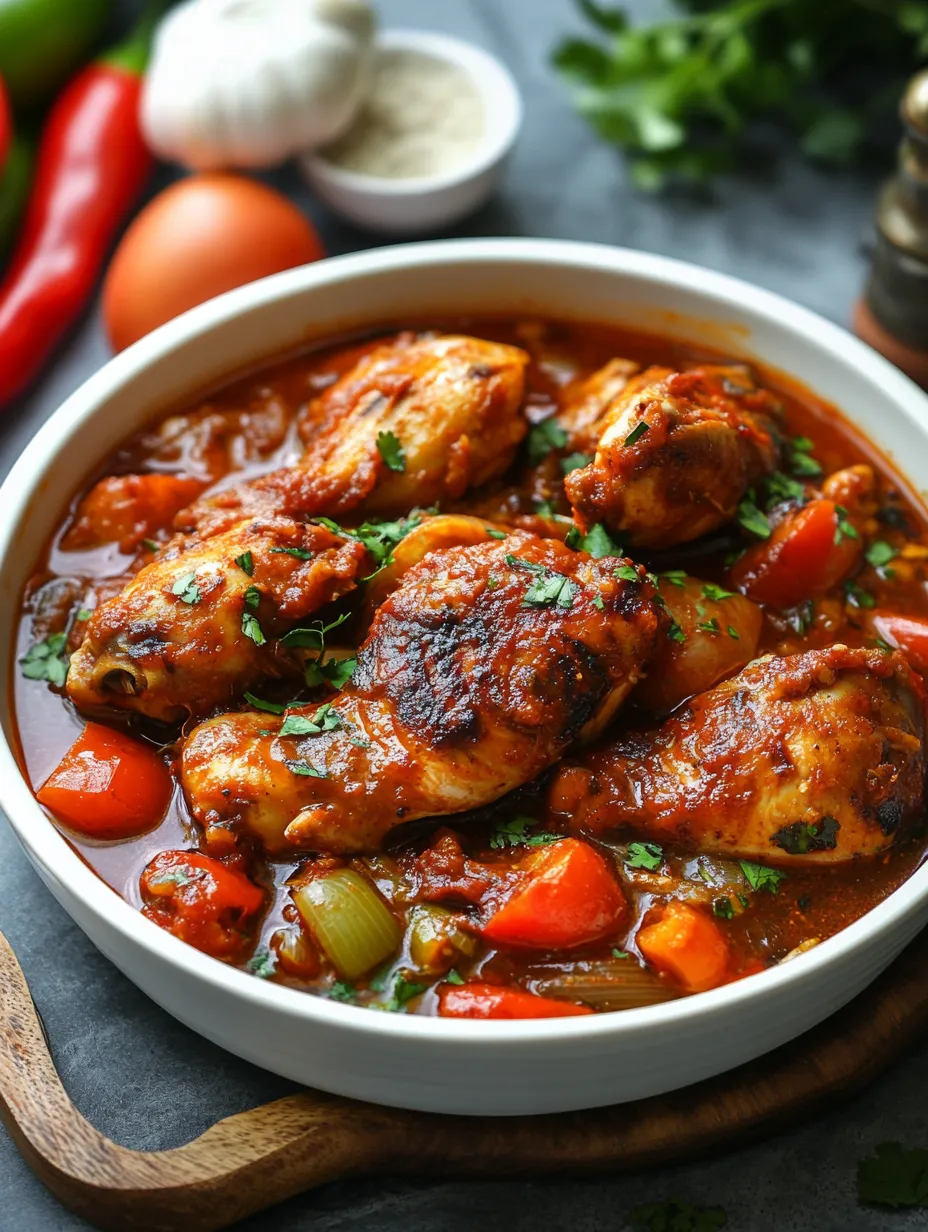
Spicy Nigerian Chicken Stew
Introduction
Have you ever wondered why Nigerian cuisine is celebrated for its bold flavors and rich textures? One dish that perfectly embodies this culinary tradition is Spicy Nigerian Chicken Stew. This dish not only tantalizes the taste buds but also serves as a staple in many households across Nigeria. In this post, we’ll explore how to create this delicious stew, packed with spices and nutrients, while also addressing common cooking challenges. Whether you’re a seasoned chef or a novice in the kitchen, this recipe will guide you through every step, ensuring a flavorful outcome every time.
Ingredients List
To craft the perfect Spicy Nigerian Chicken Stew, you’ll need the following ingredients:
- Chicken (2 lbs, cut into pieces): You can use bone-in or boneless chicken, depending on your preference.
- Onions (2 medium, chopped): Red onions add a sweeter flavor, but yellow onions work too.
- Tomatoes (4 medium, blended): Fresh tomatoes are ideal, but canned tomatoes can be a convenient substitute.
- Red bell pepper (1, blended): This adds sweetness and color; feel free to mix with green bell peppers for variety.
- Scotch bonnet peppers (2, or to taste): For authentic heat; substitute with jalapeños for a milder version.
- Garlic (4 cloves, minced): Fresh garlic enhances the stew’s aroma.
- Ginger (1-inch piece, grated): Adds warmth and depth of flavor.
- Vegetable oil (1/2 cup): Canola oil is a good alternative.
- Chicken broth (2 cups): Homemade or store-bought works well.
- Seasoning cubes (2): These enhance flavor; opt for low-sodium versions if desired.
- Salt (to taste): Essential for balancing flavors.
- Bay leaves (2): Adds a subtle earthiness.
- Thyme (1 teaspoon, dried): Fresh thyme can be used for a more robust flavor.
- Carrots (optional, sliced): For added sweetness and nutrition.
Sensory Description
Imagine the aroma of sautéed onions mingling with garlic and ginger, followed by the vibrant colors of red tomatoes and peppers simmering in a rich sauce. This stew not only looks appealing but also promises a burst of flavors with every bite.
Timing
- Preparation Time: 15 minutes
- Cooking Time: 45 minutes
- Total Time: 60 minutes
This recipe takes about 60 minutes, which is approximately 20% less time than many traditional Nigerian stews, making it a quick yet satisfying meal option.
Step-by-Step Instructions
Step 1: Prepare the Chicken
Start by washing the chicken pieces thoroughly under cold water. Pat them dry with paper towels. Season with salt and one seasoning cube, allowing them to marinate for about 10 minutes. This step is crucial for enhancing the chicken’s flavor.
Step 2: Blend the Base
In a blender, combine the chopped tomatoes, red bell pepper, scotch bonnet peppers, and half of the onions. Blend until smooth. This mixture forms the base of your stew and should be vibrant and aromatic.
Step 3: Sauté the Aromatics
In a large pot, heat the vegetable oil over medium heat. Add the remaining chopped onions and sauté until translucent. This usually takes about 5 minutes. Stir in the minced garlic and grated ginger, cooking for an additional 2 minutes until fragrant.
Step 4: Cook the Tomato Base
Pour the blended tomato mixture into the pot. Cook on medium-high heat for about 15 minutes, stirring occasionally. You’ll know it’s ready when the oil starts to separate from the sauce, indicating that the tomatoes have cooked down.
Step 5: Add the Chicken
Add the marinated chicken pieces to the pot, stirring well to coat them in the tomato sauce. Pour in the chicken broth, add the bay leaves, thyme, and the second seasoning cube. Bring the mixture to a boil, then reduce the heat to low, covering the pot.
Step 6: Simmer
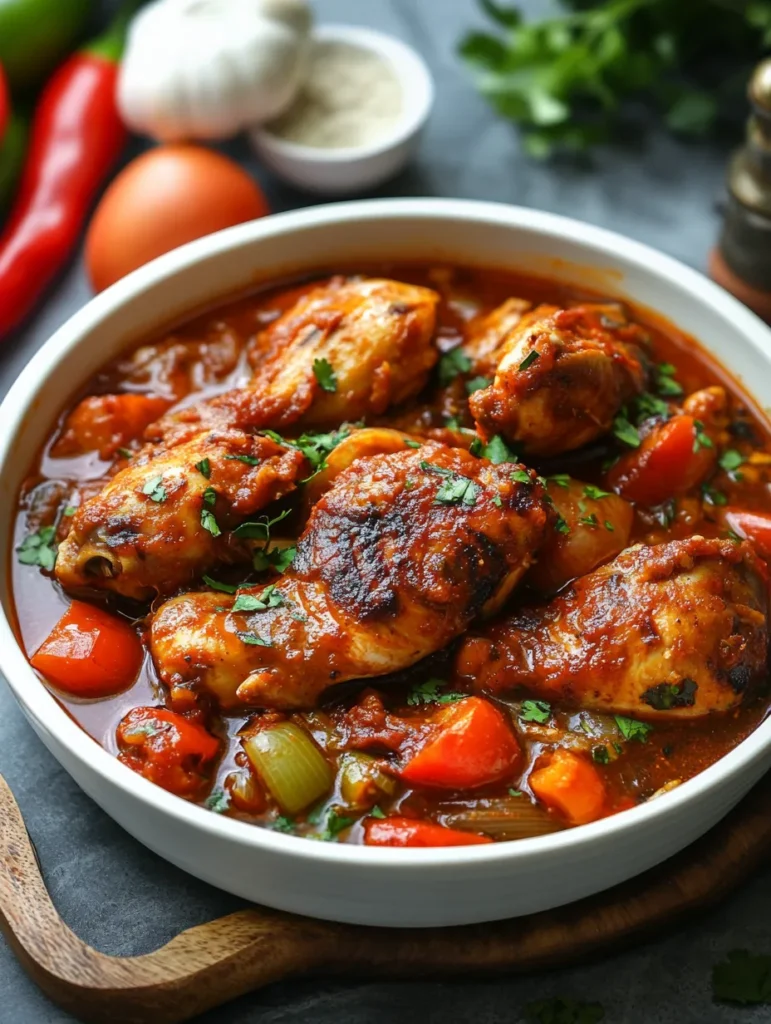
Allow the stew to simmer for about 25-30 minutes. Stir occasionally to prevent sticking. The chicken should be tender and fully cooked, absorbing all the delicious flavors of the stew.
Step 7: Final Touches
Taste and adjust seasoning with salt if necessary. If you prefer a thicker stew, you can let it simmer uncovered for an additional 5-10 minutes. Remove the bay leaves before serving.
Nutritional Information
Here’s a breakdown of the nutritional content per serving (based on 4 servings):
- Calories: 400
- Protein: 30g
- Fat: 28g
- Carbohydrates: 10g
- Fiber: 2g
- Sugar: 4g
- Sodium: 500mg
This stew is not only hearty but also a good source of protein and essential vitamins from the vegetables.
Healthier Alternatives for the Recipe
If you’re looking to make this dish healthier, consider the following swaps:
- Lean Chicken: Use skinless chicken breasts instead of thighs to reduce fat content.
- Less Oil: Reduce the amount of oil used for sautéing; you can use a non-stick pan to minimize oil usage.
- Add More Vegetables: Incorporate more vegetables like spinach or zucchini for added nutrients without significantly increasing calories.
- Low-Sodium Broth: Opt for low-sodium chicken broth to control salt intake.
Serving Suggestions
Serve your Spicy Nigerian Chicken Stew over a bed of fluffy rice or with traditional sides like pounded yam, fufu, or plantains. For a twist, try it with quinoa or couscous for a fusion experience. Garnish with fresh cilantro or parsley to add a pop of color and freshness.
Common Mistakes to Avoid
- Overcooking the Chicken: Ensure you don’t overcook the chicken, as it can become dry. Monitor cooking times closely.
- Not Blending the Tomato Base: Skipping the blending step can result in a chunky sauce that lacks the smooth texture typical of Nigerian stews.
- Under-seasoning: Be generous with your seasonings; the bold flavors are what make this dish stand out.
- Ignoring Simmering Time: Allowing the stew to simmer is crucial for flavor development. Don’t rush this step.
Storing Tips for the Recipe
- Refrigeration: Store leftovers in an airtight container in the refrigerator for up to 3 days.
- Freezing: This stew freezes well. Portion it into freezer-safe containers and freeze for up to 3 months. Thaw overnight in the refrigerator before reheating.
- Reheating: Reheat on the stove over medium heat, adding a splash of water or broth if needed to loosen the sauce.
Conclusion
In summary, Spicy Nigerian Chicken Stew is a flavorful, nutrient-rich dish that is easy to prepare and perfect for any occasion. With its vibrant ingredients and bold spices, it’s sure to impress your family and friends. Try this recipe today, and don’t forget to share your feedback in the comments below or subscribe for more delicious updates!
FAQs
What can I serve with Spicy Nigerian Chicken Stew?
You can serve it with rice, pounded yam, fufu, or plantains. It also pairs well with a side of steamed vegetables.
Can I make this stew vegetarian?
Yes! Substitute chicken with tofu or chickpeas and use vegetable broth instead of chicken broth for a delicious vegetarian version.
How spicy is this stew?
The spice level can be adjusted by varying the amount of scotch bonnet peppers. For a milder stew, use fewer peppers or remove the seeds.
Can I use frozen chicken?
Absolutely! Just ensure to thaw the chicken completely before marinating and cooking for even flavor distribution.
How long does this stew last?
When stored properly in the refrigerator, it can last up to 3 days. It also freezes well for up to 3 months.
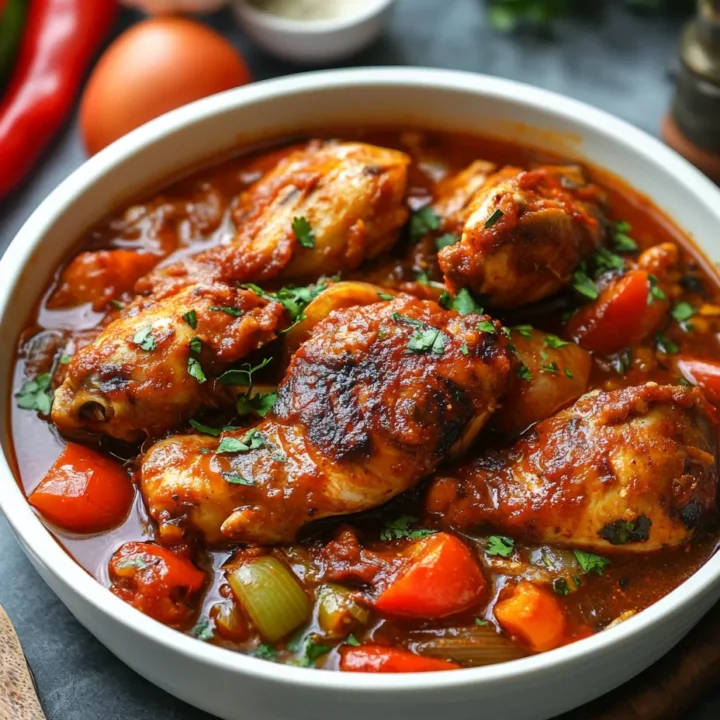
Spicy Nigerian Chicken Stew
Ingredients
- Chicken (2 lbs, cut into pieces): You can use bone-in or boneless chicken, depending on your preference.
- Onions (2 medium, chopped): Red onions add a sweeter flavor, but yellow onions work too.
- Tomatoes (4 medium, blended): Fresh tomatoes are ideal, but canned tomatoes can be a convenient substitute.
- Red bell pepper (1, blended): This adds sweetness and color; feel free to mix with green bell peppers for variety.
- Scotch bonnet peppers (2, or to taste): For authentic heat; substitute with jalapeños for a milder version.
- Garlic (4 cloves, minced): Fresh garlic enhances the stew's aroma.
- Ginger (1-inch piece, grated): Adds warmth and depth of flavor.
- Vegetable oil (1/2 cup): Canola oil is a good alternative.
- Chicken broth (2 cups): Homemade or store-bought works well.
- Seasoning cubes (2): These enhance flavor; opt for low-sodium versions if desired.
- Salt (to taste): Essential for balancing flavors.
- Bay leaves (2): Adds a subtle earthiness.
- Thyme (1 teaspoon, dried): Fresh thyme can be used for a more robust flavor.
- Carrots (optional, sliced): For added sweetness and nutrition.
Instructions
Step 1: Prepare the Chicken
Start by washing the chicken pieces thoroughly under cold water. Pat them dry with paper towels. Season with salt and one seasoning cube, allowing them to marinate for about 10 minutes. This step is crucial for enhancing the chicken's flavor.
Step 2: Blend the Base
In a blender, combine the chopped tomatoes, red bell pepper, scotch bonnet peppers, and half of the onions. Blend until smooth. This mixture forms the base of your stew and should be vibrant and aromatic.
Step 3: Sauté the Aromatics
In a large pot, heat the vegetable oil over medium heat. Add the remaining chopped onions and sauté until translucent. This usually takes about 5 minutes. Stir in the minced garlic and grated ginger, cooking for an additional 2 minutes until fragrant.
Step 4: Cook the Tomato Base
Pour the blended tomato mixture into the pot. Cook on medium-high heat for about 15 minutes, stirring occasionally. You'll know it's ready when the oil starts to separate from the sauce, indicating that the tomatoes have cooked down.
Step 5: Add the Chicken
Add the marinated chicken pieces to the pot, stirring well to coat them in the tomato sauce. Pour in the chicken broth, add the bay leaves, thyme, and the second seasoning cube. Bring the mixture to a boil, then reduce the heat to low, covering the pot.
Step 6: Simmer
Allow the stew to simmer for about 25-30 minutes. Stir occasionally to prevent sticking. The chicken should be tender and fully cooked, absorbing all the delicious flavors of the stew.
Step 7: Final Touches
Taste and adjust seasoning with salt if necessary. If you prefer a thicker stew, you can let it simmer uncovered for an additional 5-10 minutes. Remove the bay leaves before serving.