
Sweet Savory Korean Bulgogi Jerky: A Flavorful Delight
Introduction
Have you ever wondered how the rich, savory flavors of Korean bulgogi can be transformed into a convenient and delicious jerky? This sweet savory Korean bulgogi jerky recipe not only satisfies your cravings but also offers a unique twist to traditional jerky. With its perfect balance of sweet and savory, this jerky is a delightful snack that can be enjoyed anywhere. In this blog post, we’ll explore how to create this delectable treat, diving into the ingredients, preparation time, step-by-step instructions, and much more. Let’s embark on this flavorful journey together!
Ingredients List
To create your own sweet savory Korean bulgogi jerky, you’ll need the following ingredients:
- 2 pounds of beef (flank steak or sirloin is ideal)
- 1/4 cup soy sauce
- 2 tablespoons brown sugar (or coconut sugar for a healthier alternative)
- 2 tablespoons sesame oil
- 2 tablespoons rice vinegar
- 1 tablespoon minced garlic
- 1 tablespoon minced ginger
- 1 teaspoon black pepper
- 1 teaspoon red pepper flakes (adjust to taste)
- 1 tablespoon sesame seeds (for garnish)
- Optional: 1 tablespoon honey or agave syrup for extra sweetness
Ingredient Substitutions
- Beef: You can substitute with turkey or chicken for a leaner option.
- Soy Sauce: Use tamari for a gluten-free version.
- Brown Sugar: Maple syrup can be used as a natural sweetener.
- Rice Vinegar: Apple cider vinegar works well if you’re out of rice vinegar.
Timing
Preparing this sweet savory Korean bulgogi jerky is both quick and efficient. Here’s a breakdown of the time required:
- Preparation Time: 30 minutes (including marinating)
- Cooking Time: 4-6 hours (dehydrating)
- Total Time: Approximately 5-6 hours, which is about 20% less time than many traditional jerky recipes that require longer marinating and drying times.
Step-by-Step Instructions
Step 1: Prepare the Beef
Start by slicing the beef against the grain into thin strips, about 1/4 inch thick. This ensures the jerky will be tender and easy to chew. For best results, partially freeze the beef for about 30 minutes before slicing.
Step 2: Create the Marinade
In a large bowl, combine the soy sauce, brown sugar, sesame oil, rice vinegar, minced garlic, minced ginger, black pepper, and red pepper flakes. Mix well until the sugar is dissolved.
Step 3: Marinate the Beef
Add the sliced beef to the marinade, ensuring each piece is well-coated. Cover the bowl with plastic wrap and refrigerate for at least 2 hours, or preferably overnight for deeper flavor infusion.
Step 4: Prepare for Dehydration
Preheat your dehydrator to 160°F (71°C). If you don’t have a dehydrator, you can use your oven set to the lowest temperature. Line the dehydrator trays or a baking sheet with parchment paper to prevent sticking.
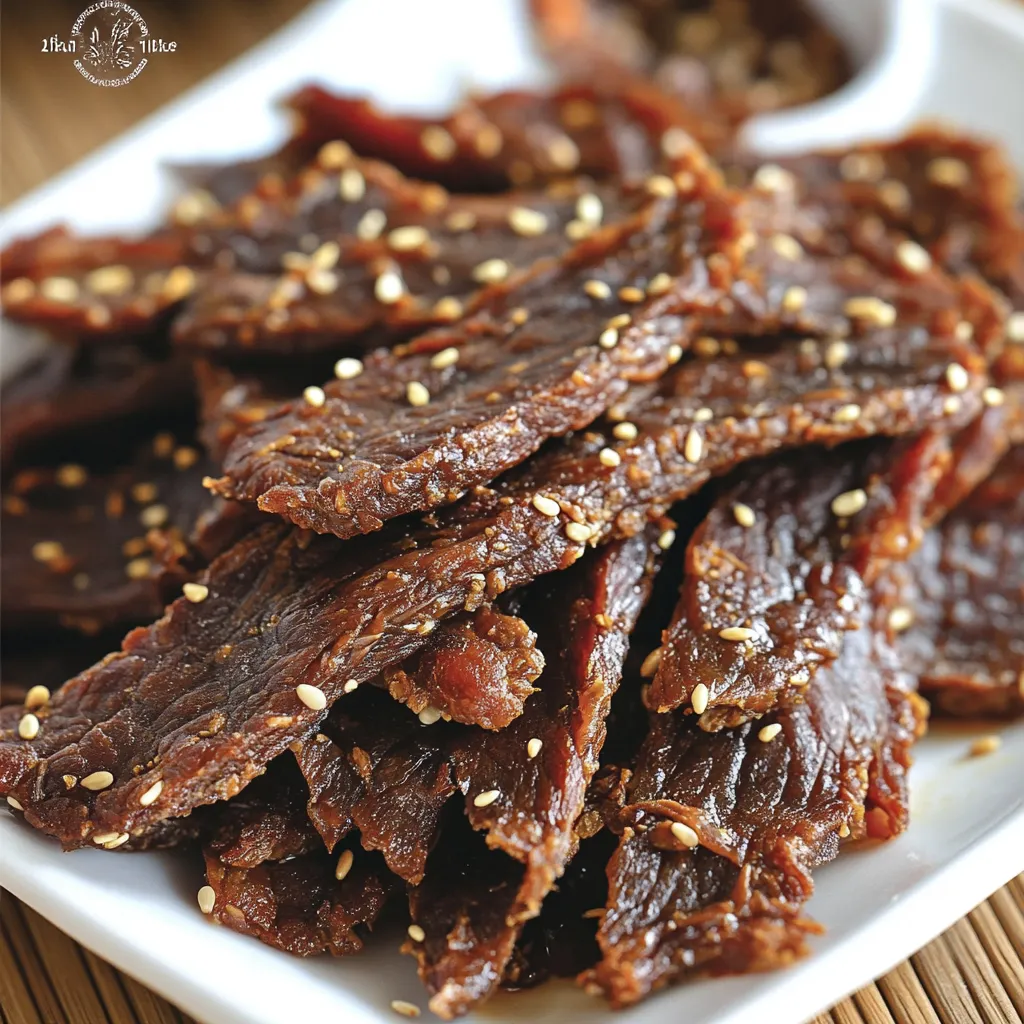
Step 5: Dehydrate the Jerky
Arrange the marinated beef strips in a single layer on the trays, making sure they do not overlap. Dehydrate for 4-6 hours, checking periodically. The jerky is done when it is dry but still slightly pliable.
Step 6: Cool and Store
Once dehydrated, let the jerky cool completely on a wire rack. Store in an airtight container or vacuum-sealed bag for up to 2 weeks at room temperature or longer in the refrigerator.
Nutritional Information
Here’s a breakdown of the nutritional content per serving (approximately 1 ounce):
- Calories: 70
- Protein: 10g
- Fat: 3g
- Carbohydrates: 3g
- Fiber: 0g
- Sugars: 1g
- Sodium: 400mg
Nutritional Insights
This jerky is a high-protein snack, making it a great option for those looking to maintain muscle or follow a low-carb diet. The use of lean beef also helps keep the fat content low.
Healthier Alternatives for the Recipe
If you’re looking to make this recipe even healthier, consider the following modifications:
- Use Leaner Cuts: Opt for cuts like eye of round or top round to reduce fat content.
- Lower Sodium Soy Sauce: Choose low-sodium soy sauce to cut back on sodium intake.
- Add Vegetables: Incorporate finely grated carrots or zucchini into the marinade for added nutrients and moisture.
Serving Suggestions
Sweet savory Korean bulgogi jerky can be enjoyed in various ways:
- On-the-Go Snack: Perfect for road trips, hiking, or as a post-workout snack.
- Charcuterie Board: Pair with cheese, nuts, and dried fruits for an impressive appetizer.
- Salad Topping: Add to salads for a protein boost and a burst of flavor.
Common Mistakes to Avoid
- Not Slicing Against the Grain: This can result in tough jerky. Always slice against the grain for tenderness.
- Over-Marinating: While marinating adds flavor, too long can make the jerky overly salty. Stick to recommended times.
- Inconsistent Thickness: Ensure uniform thickness for even drying; uneven pieces can lead to some being too chewy or too dry.
Storing Tips for the Recipe
To maintain the freshness and flavor of your jerky:
- Cool Completely: Allow the jerky to cool fully before storing to prevent moisture buildup.
- Use Airtight Containers: Store in vacuum-sealed bags or airtight containers to prolong shelf life.
- Refrigerate for Longevity: For extended storage, keep in the refrigerator or freezer.
Conclusion
In summary, this sweet savory Korean bulgogi jerky is a delightful and nutritious snack that’s easy to make at home. With its rich flavors and satisfying texture, it’s perfect for any occasion. We invite you to try this recipe and share your feedback in the comments below. Don’t forget to subscribe for more delicious recipes and updates!
FAQs
1. Can I use a different type of meat for this jerky?
Absolutely! While beef is traditional, you can use turkey, chicken, or even pork. Just adjust the cooking time as needed.
2. How do I know when the jerky is done?
The jerky should be dry but still slightly pliable. It should not snap when bent.
3. Can I make this jerky without a dehydrator?
Yes, you can use your oven! Set it to the lowest temperature and prop the door open slightly to allow moisture to escape.
4. How long does homemade jerky last?
When stored properly in an airtight container, it can last up to 2 weeks at room temperature or longer in the fridge.
5. Can I freeze the jerky?
Yes, jerky can be frozen for up to 6 months. Just make sure it’s stored in a vacuum-sealed bag or airtight container.
Sweet Savory Korean Bulgogi Jerky: A Flavorful Delight
Ingredients
- 2 pounds of beef (flank steak or sirloin is ideal)
- 1/4 cup soy sauce
- 2 tablespoons brown sugar (or coconut sugar for a healthier alternative)
- 2 tablespoons sesame oil
- 2 tablespoons rice vinegar
- 1 tablespoon minced garlic
- 1 tablespoon minced ginger
- 1 teaspoon black pepper
- 1 teaspoon red pepper flakes (adjust to taste)
- 1 tablespoon sesame seeds (for garnish)
- Optional: 1 tablespoon honey or agave syrup for extra sweetness
- Ingredient Substitutions
- Beef: You can substitute with turkey or chicken for a leaner option.
- Soy Sauce: Use tamari for a gluten-free version.
- Brown Sugar: Maple syrup can be used as a natural sweetener.
- Rice Vinegar: Apple cider vinegar works well if you’re out of rice vinegar.
Instructions
Step 1: Prepare the Beef
Start by slicing the beef against the grain into thin strips, about 1/4 inch thick. This ensures the jerky will be tender and easy to chew. For best results, partially freeze the beef for about 30 minutes before slicing.
Step 2: Create the Marinade
In a large bowl, combine the soy sauce, brown sugar, sesame oil, rice vinegar, minced garlic, minced ginger, black pepper, and red pepper flakes. Mix well until the sugar is dissolved.
Step 3: Marinate the Beef
Add the sliced beef to the marinade, ensuring each piece is well-coated. Cover the bowl with plastic wrap and refrigerate for at least 2 hours, or preferably overnight for deeper flavor infusion.
Step 4: Prepare for Dehydration
Preheat your dehydrator to 160°F (71°C). If you don’t have a dehydrator, you can use your oven set to the lowest temperature. Line the dehydrator trays or a baking sheet with parchment paper to prevent sticking.
Step 5: Dehydrate the Jerky
Arrange the marinated beef strips in a single layer on the trays, making sure they do not overlap. Dehydrate for 4-6 hours, checking periodically. The jerky is done when it is dry but still slightly pliable.
Step 6: Cool and Store
Once dehydrated, let the jerky cool completely on a wire rack. Store in an airtight container or vacuum-sealed bag for up to 2 weeks at room temperature or longer in the refrigerator.