
Thai Mango Sticky Rice Dessert
Introduction
Have you ever wondered why Thai Mango Sticky Rice is hailed as one of the most beloved desserts in Southeast Asia? This delightful dish, a perfect blend of sweet mangoes and creamy coconut rice, is not only a feast for the eyes but also a treat for the taste buds. In this blog post, we will explore the intricacies of making this iconic dessert, providing you with a step-by-step guide to creating your own Thai Mango Sticky Rice at home. Whether you’re a seasoned chef or a kitchen novice, this recipe is designed to be accessible and enjoyable. Let’s dive into the world of flavors, textures, and the art of crafting this delectable dessert.
Ingredients List
To make the perfect Thai Mango Sticky Rice, you will need the following ingredients:
- Glutinous Rice: 1 cup (also known as sticky rice or sweet rice)
- Coconut Milk: 1 cup (full-fat for creaminess)
- Sugar: 1/3 cup (you can use palm sugar for a more authentic taste)
- Salt: 1/4 teaspoon
- Ripe Mangoes: 2 large (choose sweet varieties like Nam Dok Mai or Ataulfo)
- Sesame Seeds or Mung Beans: for garnish (optional)
Substitutions:
- Rice: If glutinous rice is unavailable, you can use jasmine rice, but the texture will differ.
- Coconut Milk: Light coconut milk or almond milk can be used for a lower-calorie option.
- Sweetener: Honey or agave syrup can replace sugar for a natural sweetness.
Timing
Preparing Thai Mango Sticky Rice is surprisingly quick, taking about 90 minutes from start to finish. This is approximately 20% less time than the average dessert recipe, making it a perfect choice for a last-minute treat. Here’s a breakdown of the timing:
- Preparation Time: 30 minutes (includes soaking the rice)
- Cooking Time: 30 minutes
- Cooling Time: 30 minutes
Step-by-Step Instructions
Step 1: Soak the Rice
Begin by rinsing the glutinous rice under cold water until the water runs clear. This removes excess starch. Soak the rice in water for at least 4 hours or overnight for best results.
Step 2: Steam the Rice
After soaking, drain the rice and place it in a steamer basket lined with cheesecloth. Steam the rice over boiling water for about 25-30 minutes, or until tender and translucent.
Step 3: Prepare the Coconut Sauce
While the rice is steaming, combine the coconut milk, sugar, and salt in a saucepan. Heat over low to medium heat, stirring until the sugar dissolves. Do not let it boil. Reserve 1/4 cup of this mixture for drizzling later.
Step 4: Mix the Rice with Coconut Sauce
Once the rice is done steaming, transfer it to a large bowl. Pour the heated coconut sauce over the rice and gently fold it in. Cover and let it sit for about 15 minutes to absorb the flavors.
Step 5: Prepare the Mango
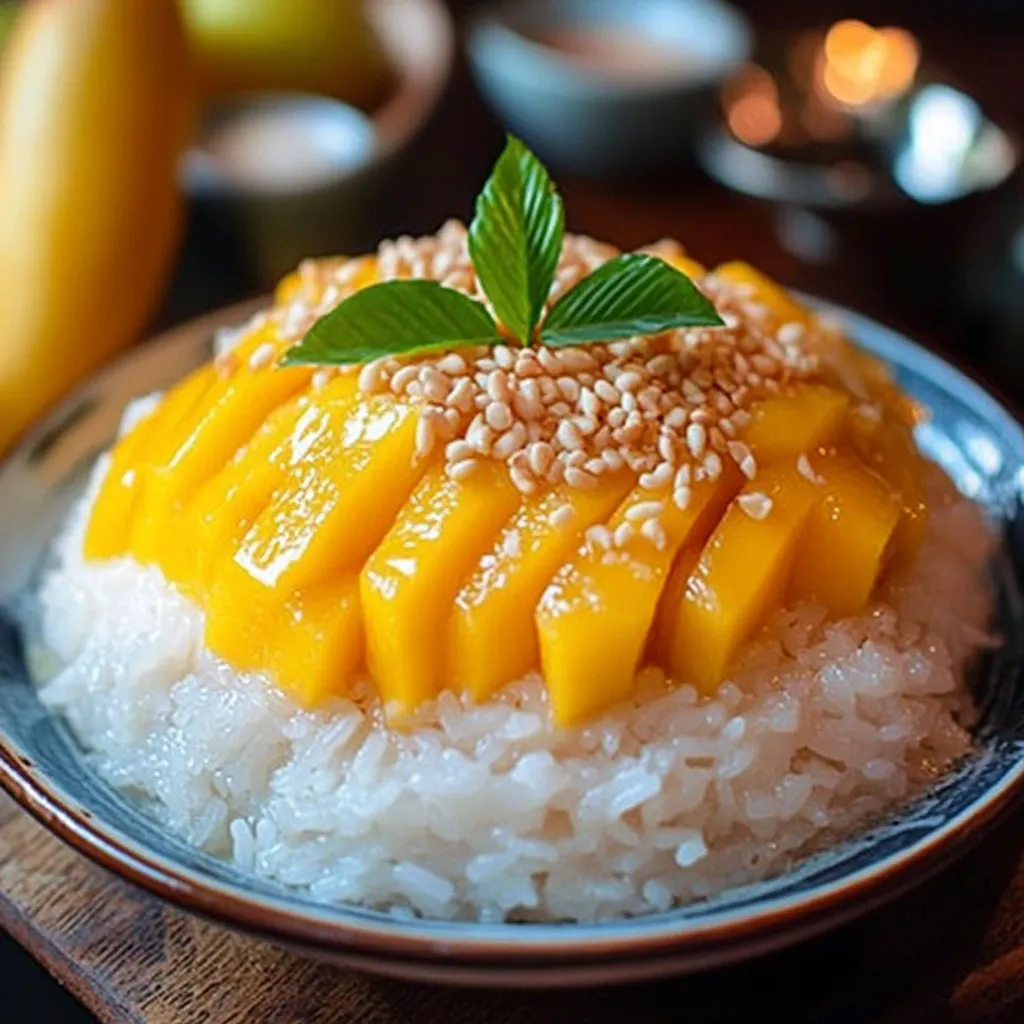
Peel the mangoes and slice them into thin strips. For an elegant presentation, you can fan out the slices on a plate.
Step 6: Serve
To serve, mold a portion of the sticky rice onto a plate, arrange the mango slices beside it, and drizzle the reserved coconut sauce on top. Garnish with sesame seeds or mung beans if desired.
Nutritional Information
Here’s a breakdown of the nutritional content per serving (approximately 1 cup of sticky rice with mango):
- Calories: 320
- Carbohydrates: 60g
- Protein: 4g
- Fat: 10g
- Sugar: 15g
- Fiber: 2g
Nutritional Insights:
- Glutinous Rice provides energy and is gluten-free.
- Coconut Milk offers healthy fats, though it should be consumed in moderation.
Healthier Alternatives for the Recipe
If you’re looking to make this dessert a bit healthier without sacrificing flavor, consider these modifications:
- Use Less Sugar: Reduce the sugar to 1/4 cup or substitute with a natural sweetener like stevia.
- Add Fruits: Incorporate other fruits like strawberries or blueberries for added vitamins.
- Coconut Cream: For a richer flavor, use coconut cream instead of coconut milk but in moderation.
Serving Suggestions
Thai Mango Sticky Rice can be served in various delightful ways:
- Chilled: Serve the dessert chilled for a refreshing treat on hot days.
- With Ice Cream: Pair it with coconut or vanilla ice cream for an indulgent twist.
- As a Breakfast Option: Enjoy it as a breakfast dish by adding nuts and seeds for crunch.
Common Mistakes to Avoid
- Not Soaking the Rice: Skipping the soaking step can lead to unevenly cooked rice.
- Overcooking the Coconut Sauce: Boiling the coconut milk can cause it to separate; heat gently.
- Using Unripe Mangoes: Ensure your mangoes are ripe for the best flavor.
Storing Tips for the Recipe
To maintain the freshness and flavor of your Thai Mango Sticky Rice:
- Refrigeration: Store leftovers in an airtight container in the refrigerator for up to 2 days.
- Freezing: You can freeze the sticky rice for up to a month; just reheat it gently before serving.
- Mango Storage: Keep sliced mangoes in an airtight container for up to 3 days in the fridge.
Conclusion
Thai Mango Sticky Rice is a delightful dessert that combines the sweetness of ripe mangoes with the rich creaminess of coconut rice. With simple ingredients and easy-to-follow steps, you can create this exquisite dish at home. We invite you to try this recipe, share your experience in the comments, and subscribe for more delicious updates!
FAQs
1. Can I use regular rice instead of glutinous rice?
While you can use regular rice, glutinous rice is essential for the signature sticky texture of this dessert.
2. How can I tell if my mangoes are ripe?
Ripe mangoes should yield slightly to pressure and have a sweet aroma. Look for a vibrant color, depending on the variety.
3. Is this dessert vegan?
Yes, Thai Mango Sticky Rice is naturally vegan, as it contains no animal products.
4. Can I make this dessert ahead of time?
Absolutely! You can prepare the sticky rice in advance and store it in the refrigerator. Just assemble with fresh mango before serving.
5. What can I use as a topping?
In addition to sesame seeds or mung beans, consider shredded coconut, nuts, or a drizzle of honey for extra flavor.
Thai Mango Sticky Rice Dessert
Ingredients
- Glutinous Rice: 1 cup (also known as sticky rice or sweet rice)
- Coconut Milk: 1 cup (full-fat for creaminess)
- Sugar: 1/3 cup (you can use palm sugar for a more authentic taste)
- Salt: 1/4 teaspoon
- Ripe Mangoes: 2 large (choose sweet varieties like Nam Dok Mai or Ataulfo)
- Sesame Seeds or Mung Beans: for garnish (optional)
- Substitutions:
- Rice: If glutinous rice is unavailable, you can use jasmine rice, but the texture will differ.
- Coconut Milk: Light coconut milk or almond milk can be used for a lower-calorie option.
- Sweetener: Honey or agave syrup can replace sugar for a natural sweetness.
Instructions
Step 1: Soak the Rice
Begin by rinsing the glutinous rice under cold water until the water runs clear. This removes excess starch. Soak the rice in water for at least 4 hours or overnight for best results.
Step 2: Steam the Rice
After soaking, drain the rice and place it in a steamer basket lined with cheesecloth. Steam the rice over boiling water for about 25-30 minutes, or until tender and translucent.
Step 3: Prepare the Coconut Sauce
While the rice is steaming, combine the coconut milk, sugar, and salt in a saucepan. Heat over low to medium heat, stirring until the sugar dissolves. Do not let it boil. Reserve 1/4 cup of this mixture for drizzling later.
Step 4: Mix the Rice with Coconut Sauce
Once the rice is done steaming, transfer it to a large bowl. Pour the heated coconut sauce over the rice and gently fold it in. Cover and let it sit for about 15 minutes to absorb the flavors.
Step 5: Prepare the Mango
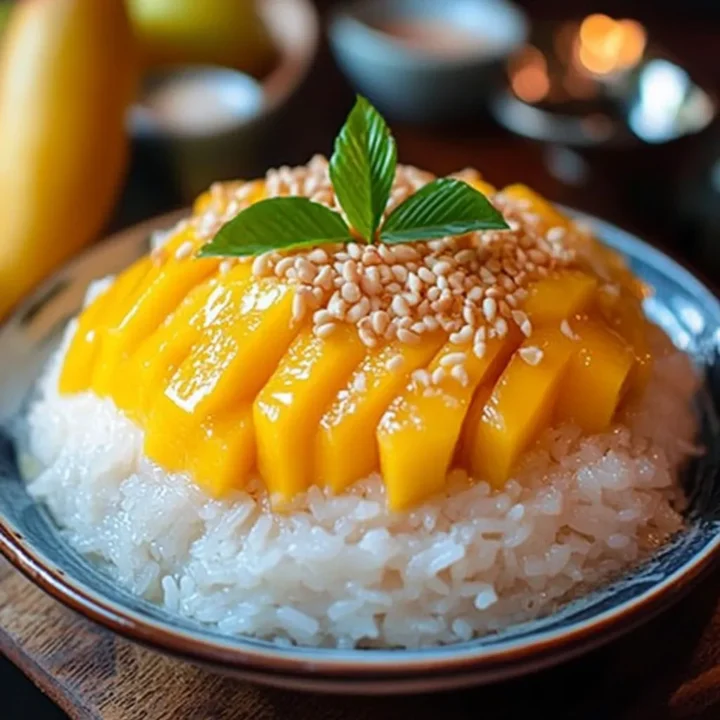
Peel the mangoes and slice them into thin strips. For an elegant presentation, you can fan out the slices on a plate.
Step 6: Serve
To serve, mold a portion of the sticky rice onto a plate, arrange the mango slices beside it, and drizzle the reserved coconut sauce on top. Garnish with sesame seeds or mung beans if desired.